
New edition published 26 November 2026. This guide revisits a topic from the school’s earlier website.
If the water bottle stays on the kitchen counter three mornings in a row, a parent may be tempted to pack it for the child every day. A different starting point is to ask, “When would it be easiest for you to remember it?” Filling the bottle, remembering it and carrying it are three separate jobs. Finding the tricky one gives a child something they can actually practise.
Choose a responsibility small enough to see
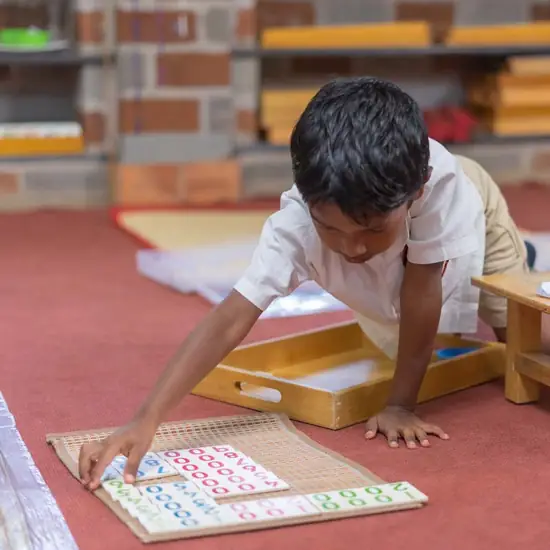
At Samskaara, children in the mixed-age Montessori environment choose work, share materials and help care for their surroundings. At home, start with a job your child already partly knows. A younger child might put a spoon beside each plate. An older child might pack the materials needed for a particular school day. Ask them to show you how they usually do it. Watching one attempt together can reveal that the spoons are out of reach or the timetable is hard to read. Explore the school’s approach to learning.
Let the child choose the reminder
In the water-bottle example, a child could leave the empty bottle beside the breakfast plate, or put a small drawing of it on the inside of the front door. Let them choose one idea and try it for a few mornings. A parent can help place the reminder and then allow enough time for the child to use it. Agree ahead of time how you will help if the family is rushing.
Use the next conversation to adjust the routine
On Friday, ask which mornings were easy and what happened on the difficult one. If the drawing went unnoticed because everyone left by the side door, the child has found something worth changing. Move it and try again. A useful observation to share with a teacher might be, “She checked the picture and remembered her bottle on two mornings.” That gives the teacher a concrete starting point for a conversation about how she manages her things at school.