Classroom stories
Teachers from Casa and Elementary share moments from their classrooms and kitchens.
An A’maze’ing Feat
MadhuBala Mohan · Casa · 10–14 July
It is a beautiful sight to see little hands and feet at work, but would you trust your child with a heavy tray? We do! Our Casa children practised walking through a maze, carrying a bowl of water on a tray, with utmost focus… their eyes, hands and feet in perfect coordination.
Why? You ask… Inside the environment, all children choose material of their interest, on their own, be it glassware, earthenware or steel. We trust in our children and this builds in them a sense of responsibility and independence, the keys to success.
Cleanup, clean up, little stars! Once the activity was done, we felt an immense sense of fulfilment when a Senior Montessori child volunteered and tidied up the maze floor with a mop while the other younger children observed her act of community caring. Madam Maria Montessori’s vision of self-reliance was exhibited by these little Montessorians through these gestures. Joy is truly in the tiny details.
60 Minutes with 16 Chefs
Pavithra Arulvel · Elementary kitchen · 27 June 2023
Veggies were lined up – carrots and potatoes, onions and tomatoes, corn and peas – to be turned into a mouth-watering recipe. Our chefs were dressed in custom-made aprons, armed with their culinary weapons! Their little hands were cleaning, peeling, chopping and grating, filling the new elementary kitchen with rhythmic sounds.
“Whiiiiiissssssssss” went our pressure cooker, creating a sudden silence among the children. Butter melted over the buns, aromatic masalas blended into the steamed vegetables, and a lavish sprinkle of coriander leaves gave the final touch. Did it stop there? Not at all! From creation to cleaning – children made sure to leave no spoon unturned in their efforts to restore the kitchen to its pristine state – as the Montessori mantra goes – “Everything in its place and a place for everything”.
Within seconds the delicious snack paved its way into everyone’s tummy. And so with slurps and burps, smiles and plates wiped clean, the story of the Pav Bhaji ended in the Elementary cooking station.
Stories Immortal
Sindhuja M · Elementary block · 21 June 2023
Everyone is a storyteller – Mother Nature is no exception. As Samskaarians returned to school after their summer vacation, the first week in the elementary block was filled with stories! Stories about travels, events, family time, visits to grandparents’ home, and the Story of Creation. We allow children to explore the world around them, but truly, there are things that can’t be reached like the stars, Moon, Sun, or our past.
The first great story imparts the scientific information of how the universe was created (oh yes… The Big Bang Theory) in a way that appeals to the imagination of children aged 5 to 12 years. This story has a blend of mystery and truth, with dramatic language that fascinates children and brings alive their eagerness to know more about the things they have heard. It also encourages children to settle down in the environment, like every particle followed a certain law and settled down when the universe was created… as they are told in the story.
The story enhances knowledge and touches children emotionally – awakening their gratitude towards Mother Nature or “The Great Power” as it is named in Montessori pedagogy. We, humans, are addicted to stories. And great stories never die even though the storytellers do. Do you tell stories to your children?
Morning struggles and tears – sound familiar?
Reflections from the Montessori classroom
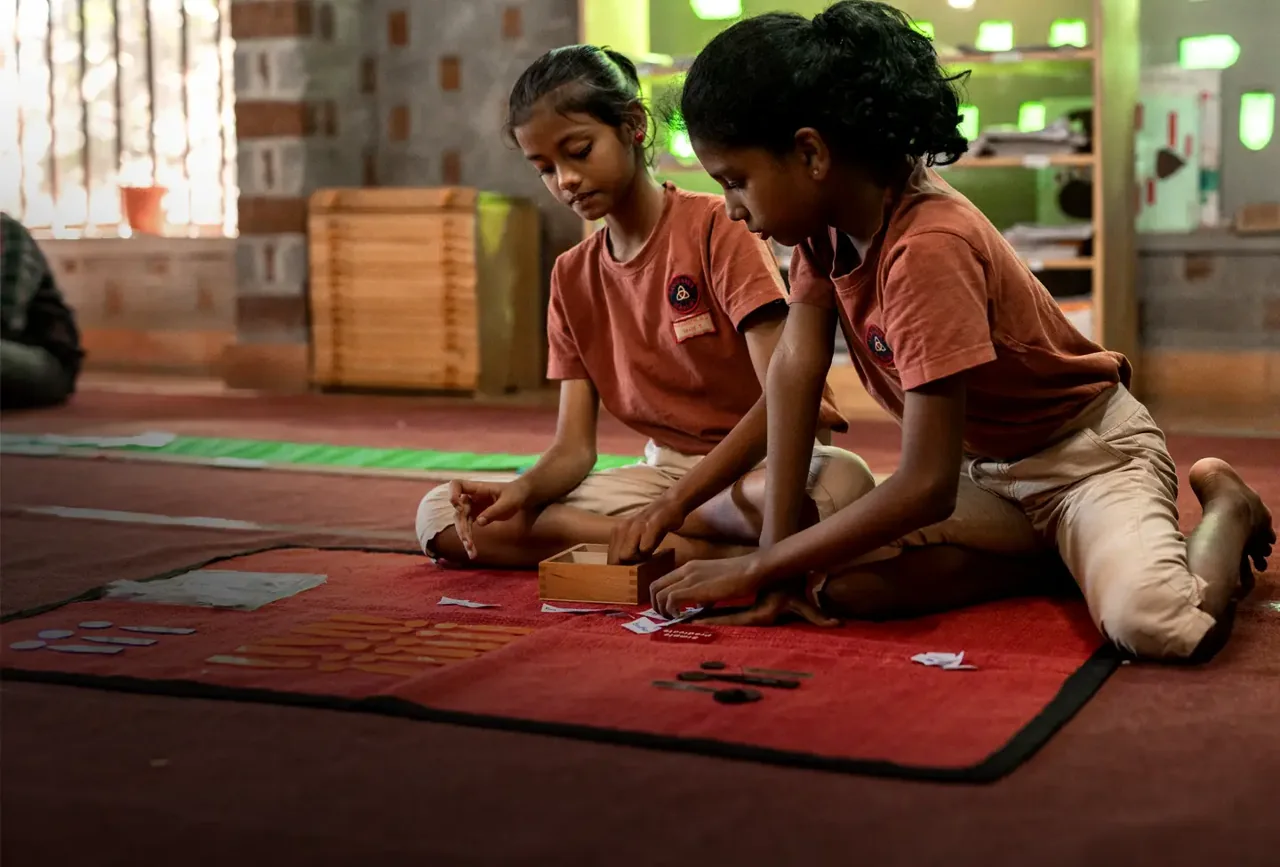
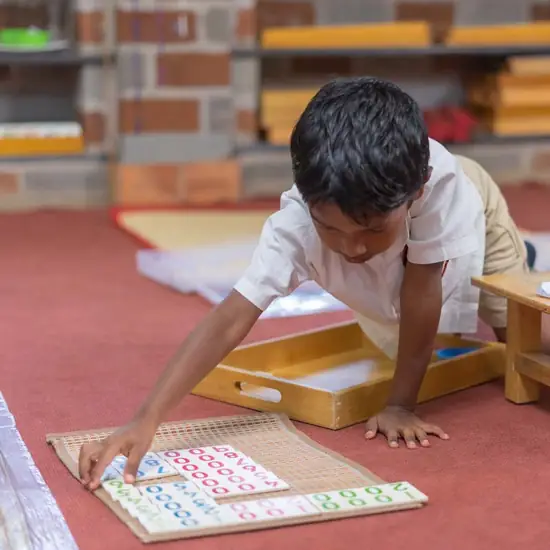
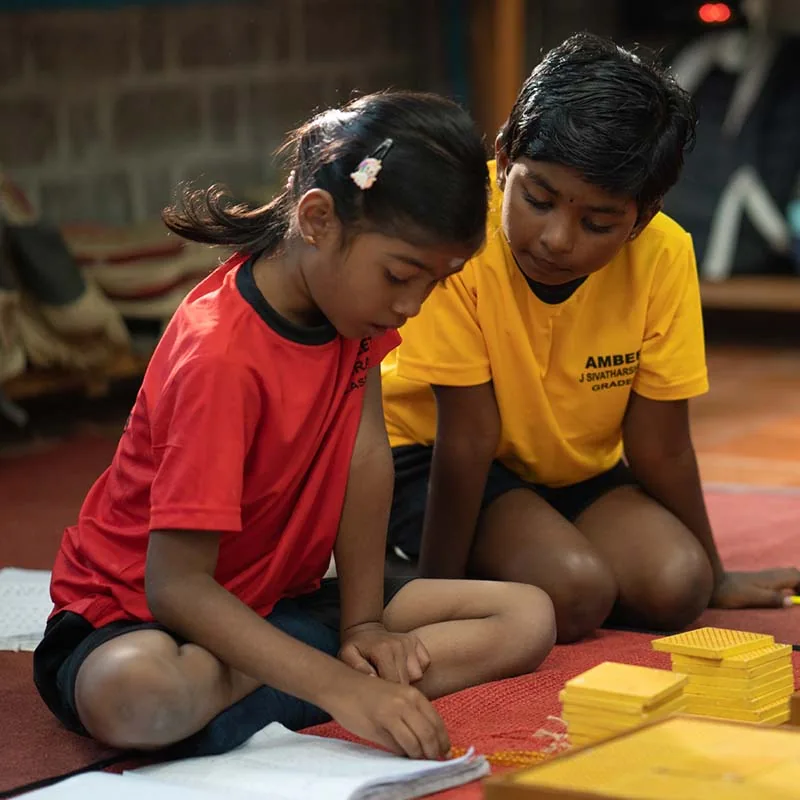
The moment of separation at the school door can be the hardest part of a small child’s day. Some wave goodbye happily. Others face an unfamiliar place and new adults with a heavy heart. Casa di Bambini means “House of Children”. The freedom to choose, move, talk and work with their hands helps children gradually make this second home their own.
The facilitators offer a loving presence and space for the child to explore. School time can grow from an hour towards a full day. Mopping, cleaning, cooking, cutting and painting make room for patience, partnership and a sense of belonging. Sometimes we hear a child crying while still working. Soon the work absorbs them, or a little friend comforts them. In a mixed-age classroom, older children look after younger ones like school siblings, and the younger ones learn by watching.