
New edition published 26 November 2026. This guide revisits a topic from the school’s earlier website.
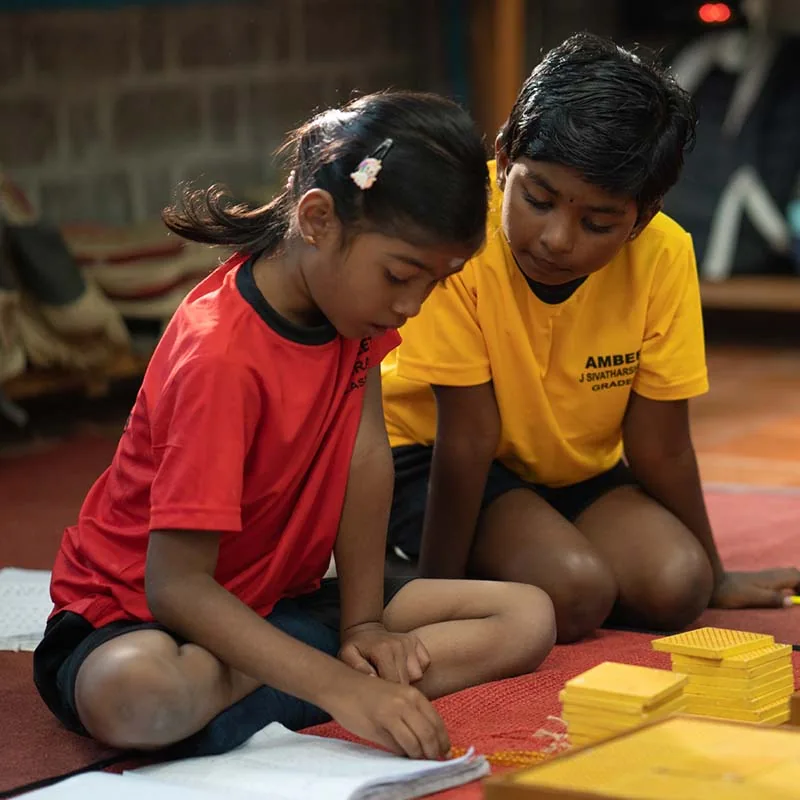
What changes when a child moves from a Montessori classroom towards the Grade 10 ICSE examination? Take a simple question about quantity. A young child can place a counter beside each object to find out how many there are. Years later, a pupil may need to explain a calculation on paper so that someone else can follow it. Both tasks involve number. The second asks the pupil to make the reasoning visible without the objects on the table.
Finding words for experience in Casa Montessori
In Casa, ages two and a half to six, a child might feel the difference between a rough surface and a smooth one before the guide names each quality. Children handle quantities as well as number symbols. Language has a similarly tangible beginning. After listening for the sounds in an English word, a child can arrange letters of the moveable alphabet to compose it. Tamil and Hindi also have a place in the Montessori environment.
Following a question in Elementary
In Grades 1–5, children have time to investigate a question and work towards a result with guidance. One way into this is through the stories children revisit as they grow. The first time a child hears a story about the beginnings of life, one creature or image may hold their attention. On a later telling, that child can ask what came before it, how we know, and where to look next. Families can read more in the school’s account of the grade stories.
Explaining an idea in middle and high school
Grades 6–8 follow an integrated syllabus in the ICSE pattern. Teachers connect subjects around a common question. Consider a question about rainfall. Drawing a graph requires decisions about scale, while describing why two places receive different amounts calls for geography. The same information can support two quite different explanations.
In Grades 9–10, pupils follow the ICSE board syllabus and begin examination preparation in Grade 9. Subject lessons, practical work and tests give them ways to check what they can explain independently. When you visit, ask to see how a familiar idea appears at two different stages. The school’s guide to each programme can help you choose a starting point.